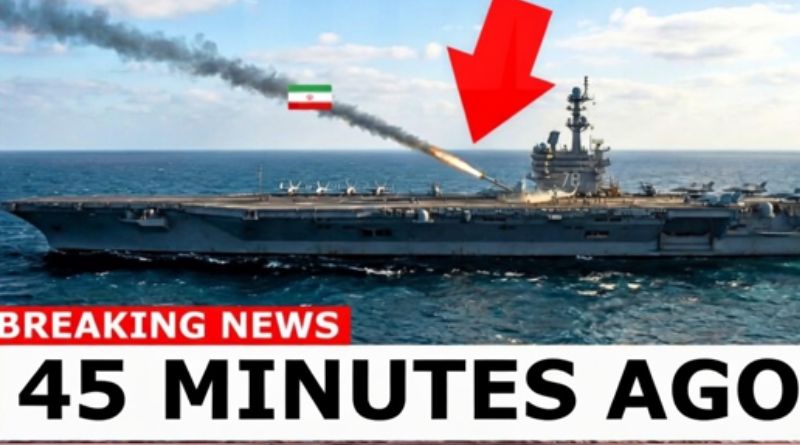
🚩Iran Fired 8 Deadly Missiles at a U.S. Aircraft Carrier — America’s Response Was…
In a high-stakes confrontation in the Arabian Sea, the USS Gerald R. Ford faces a lethal saturation attack from Iran. While seven incoming missiles are sophisticated decoys designed to overwhelm the Aegis Combat System, one carries a deadly Khorramshahr warhead. Despite the carrier’s advanced automated defenses, the interceptor inventory is eventually exhausted, leaving the ship vulnerable to remaining threats. This scenario underscores the tactical challenge of Deception Tactics in modern Naval Warfare, where technical systems struggle to distinguish between real threats and decoys under extreme pressure.
The situation shifts when Lieutenant Rachel Webb identifies a minute 0.3 percent discrepancy in the exhaust plume of contact 6. Her human intuition and specialized training allow her to flag the genuine threat that automated sensors missed. This encounter highlights the critical balance between Automated Defense Systems and human judgment. As Missile Technology evolves, the United States Navy must integrate technological superiority with human vigilance to counter sophisticated adversaries. Ultimately, the survival of the Aircraft Carrier depends on recognizing subtle details amidst a High-Explosive engagement.