Suspected Gunman in WH Correspondents’ Dinner Shooting

A suspected gunman believed to be from California opened fire outside the Washington Hilton, where the annual dinner of White House correspondents was being held, prompting a massive law enforcement response and the evacuation of President Donald Trump and other attendees.

Trump was not injured, and other top U.S. leaders were evacuated after what officials described as a security threat. Authorities have not reported any immediate injuries, but one law enforcement official said a shooter had opened fire. Trump and hundreds of guests were gathered. The event was abruptly canceled and is expected to be rescheduled.

Secret Service agents and other law enforcement officers quickly flooded the area as guests took cover under tables. Gasps rippled through the ballroom as the situation unfolded, and journalists scrambled to relay information as it came in.

What we know about the suspected gunman

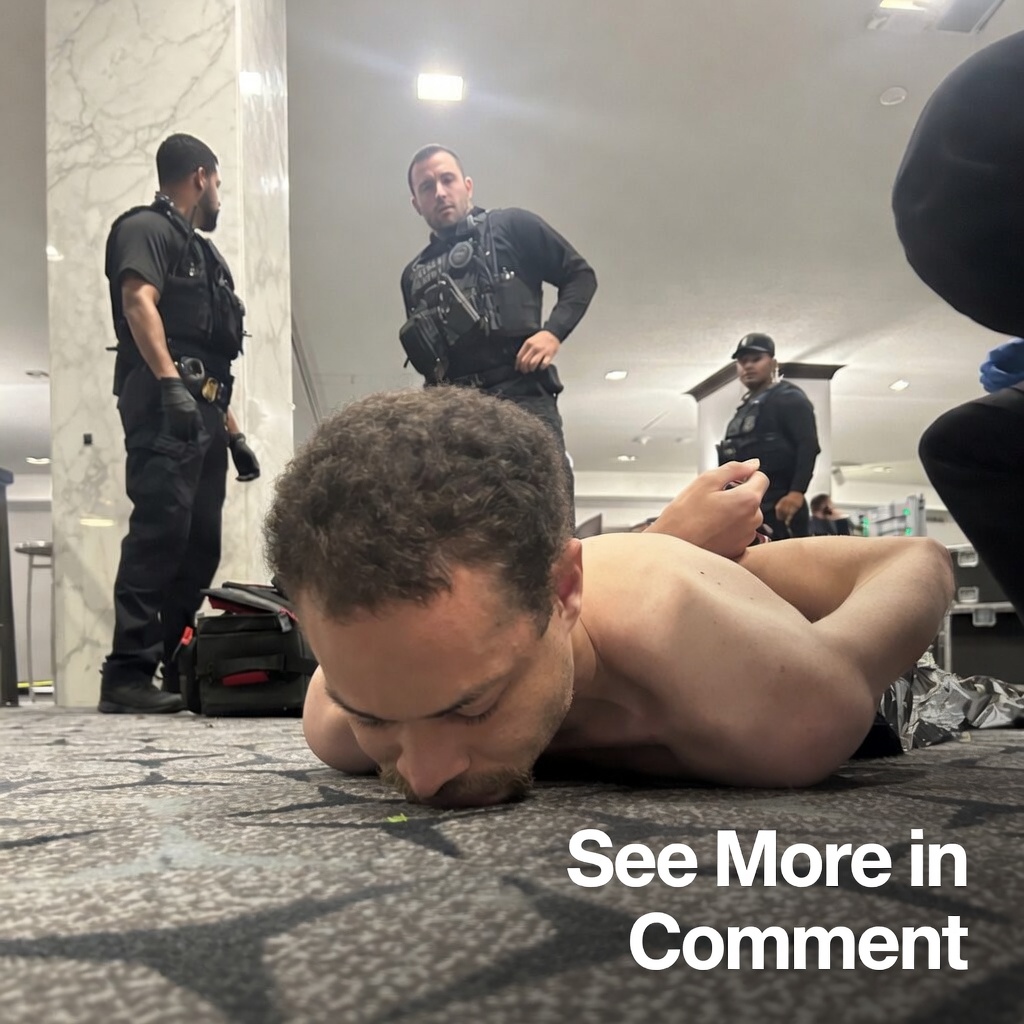
What we know: President Donald Trump shared an image of the suspected gunman on Truth Social. In a news conference, he said the gunman was from California.

What we don’t know: Authorities have not released the suspect’s name.

What they’re saying: Trump said the suspect was armed with multiple weapons before stopped by Secret Service. One officer was shot, but he was protected by a bulletproof vest. “He was shot from very close distance with a very powerful gun, and the vest did the job,” Trump said.

What you can do: The FBI says if you have any information about the suspected gunman to call 1-800-CALL-FBI. This story is developing. Check back for updates.
Similar Posts

  • 173 House Dems Vote Against Resolution Honoring Police

    House Democrats were largely against a resolution supporting law enforcement amid a spike in assaults on police last year. Just 29 House Democrats voted for a Republican measure praising the “extraordinary sacrifice” of law enforcement officers and denouncing the “defund the police” campaign for endangering public safety. However, 173 Democrats voted against the motion, led…

  • ‍♂️‍♂️Trump looked straight at reporters and said the quiet part out loud

    Trump Cuba Takeover Remarks Spark Intense Debate in 2026 President Donald Trump made headlines with his bold comments on Cuba. He suggested a possible “friendly takeover” during a media interaction. This direct language caught many off guard. Observers noted how candid he sounded. His words quickly spread online and fueled discussions Trump Cuba Takeover Remarks…

  • 😳Chelsea Clinton Opens Up About Receiving a Positive Test Result

    Chelsea Clinton recently became the focus of widespread online discussion after viral posts claimed she had publicly revealed a serious health scare tied to “extreme exhaustion.” The emotional stories described a moment in which she supposedly admitted that years of nonstop work, travel, advocacy, speeches, and parenting had finally taken a toll on her health….

  • The U.S. Launches the War

    The U.S. Launches the War in late February 2026 with coordinated strikes alongside Israel. The attacks targeted Iranian military sites and triggered a wider regional conflict. Air and missile strikes quickly expanded across several fronts. Iran responded with ballistic missiles and drones targeting Israel and U.S. positions. Origins of the Conflict Behind U.S. Launches the War The crisis developed over decades of tension between Iran, Israel, and the United States. Disputes involved regional influence, security alliances, and Iran’s nuclear ambitions. Missile exchanges and proxy conflicts increased during 2024 and 2025. Attacks on commercial shipping in the Red Sea also raised tensions. U.S. Launches the War With Joint Strikes On 28 February 2026, U.S. and Israeli forces launched coordinated airstrikes inside Iran. The strikes hit military targets in Tehran, Isfahan, and Qom. Pentagon sources said the operation targeted missile launchers, drone bases, and command facilities. The mission carried the code name Operation Epic Fury. Military Escalation Across the Region U.S. and Israeli forces used bombers and cruise missiles in early attacks. Naval aircraft from the USS Abraham Lincoln also supported the operations. Iran responded with missile and drone strikes across the Gulf region. Targets included Israel and U.S. bases in Kuwait, Bahrain, Saudi Arabia, Qatar, and the United Arab Emirates. Global Reactions and Economic Effects International reactions remain divided as the conflict expands. The United Nations called for diplomacy to prevent further escalation. Oil prices rose above 100 dollars per barrel during the crisis. Financial markets also showed volatility amid energy supply concerns.

Leave a Reply

Your email address will not be published. Required fields are marked *