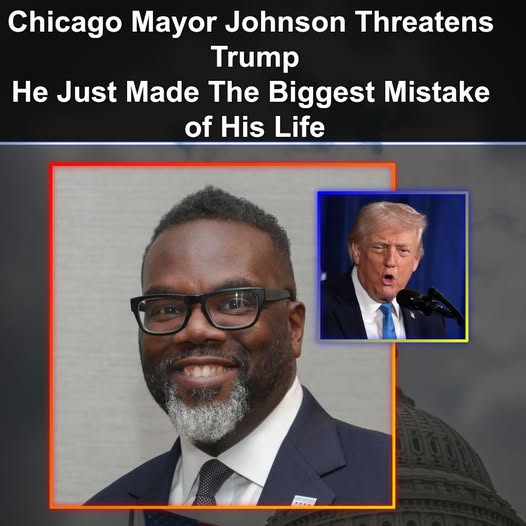
Chicago Mayor Johnson Threatens President Trump Over Crime- Fighting Deployment – He Just Made the Biggest Mistake Of H…
Chicago Mayor Brandon Johnson has sparked major controversy after signing an executive order aimed at resisting federal intervention efforts tied to former President Donald Trump’s public safety agenda. The order directs the city’s legal team to challenge federal actions and limits cooperation between local police and federal authorities. Critics argue that this approach prioritizes political positioning over immediate safety concerns, while supporters say it protects residents’ rights and prevents federal overreach.
Opponents of the mayor’s decision claim the policy could hinder efforts to address crime and reduce coordination with federal agencies. They argue that restricting collaboration may unintentionally create gaps in enforcement. Johnson, however, has framed his actions as a defense of vulnerable communities, emphasizing concerns about families being separated and civil liberties being compromised.
Meanwhile, figures aligned with Trump’s approach, including immigration official Tom Homan, have signaled that federal authorities intend to move forward regardless of local resistance. Their stance reflects a broader push to prioritize enforcement in cities with sanctuary-style policies, which they argue contribute to increased strain on public resources.
Some observers point to Washington, D.C., where federal involvement in law enforcement has reportedly contributed to crime reduction, as an example of what could happen in Chicago. Others caution that each city faces unique challenges and that outcomes may not be directly comparable.
As political tensions rise, the debate highlights a larger national divide over how to balance public safety, federal authority, and local governance. With elections approaching, decisions like Johnson’s are likely to remain a focal point, shaping both public opinion and campaign narratives in the months ahead.